
‘A Separation’ (2011)

You can tell a class a good deal about a film before the lights go down, but the first image in A Separation renders most prefatory remarks provisional. A woman in a headscarf sits before an unseen judge and calmly makes her case for divorce. The camera occupies the judge’s point of view, which means she is also speaking to us. She wants to leave Iran. Her husband does not. They have an eleven-year-old daughter, a mortgage, an elderly parent in decline, and the kind of shared history that does not dissolve because one party files paperwork. It is a scene of civility and grievance, of argument conducted in measured tones, and it quietly announces the film’s governing premise: decency is not a fixed trait but a practice conducted under pressure.
I am screening A Separation next week for my LifeQuest class, and it fits squarely within the concerns that have guided our recent series on the cost of decency. Asghar Farhadi’s 2011 film—winner of the Academy Award for Best Foreign Language Film and numerous international honors—is often described as a domestic drama. That undersells it. What begins as the story of a marriage at an impasse opens outward into a moral inquiry involving class, gender, religion, the state, and the small daily negotiations that allow people to live alongside one another without coming to blows. It is as suspenseful as any procedural, yet its stakes are emotional and ethical rather than forensic.
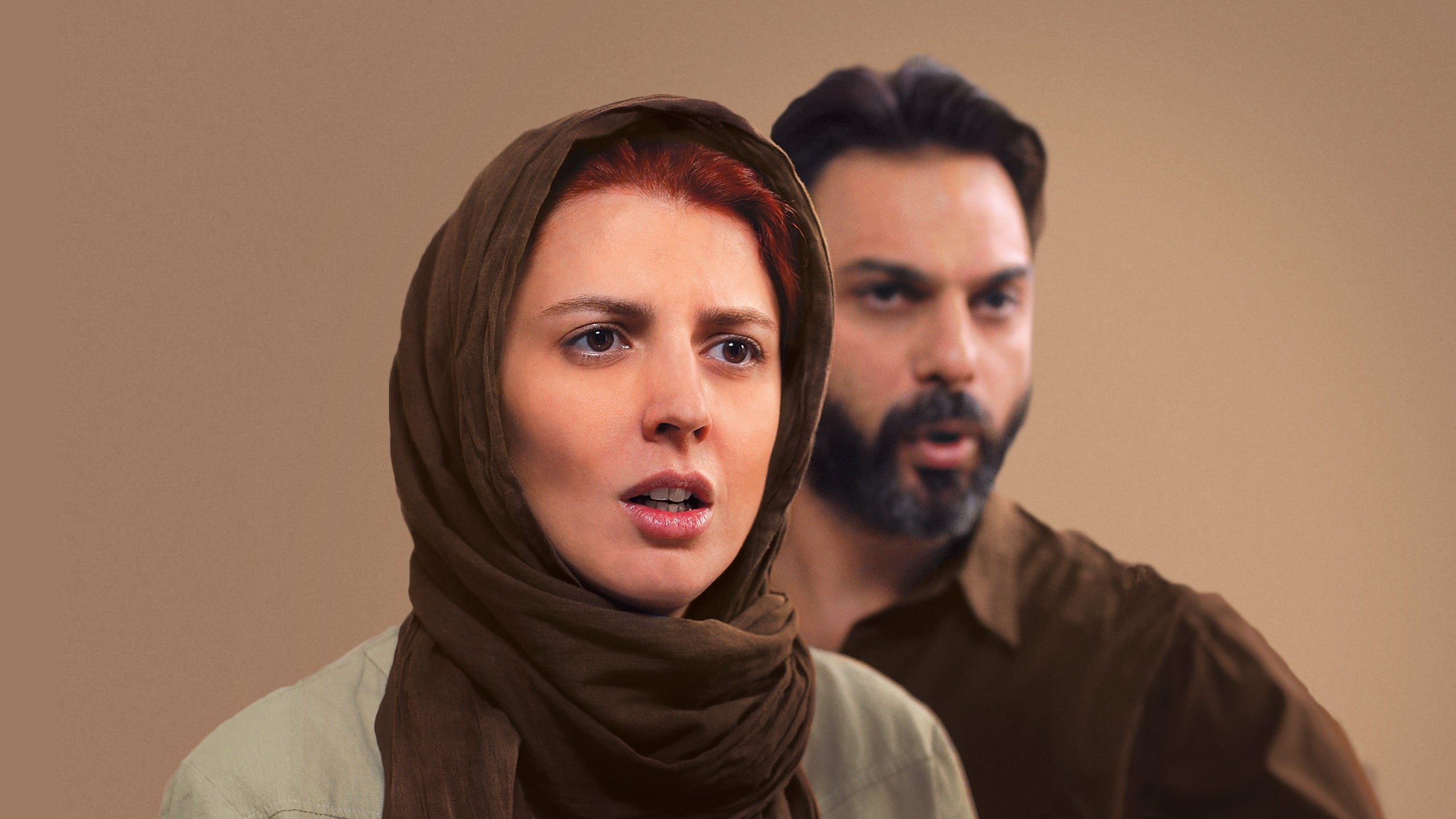
The couple at the center of the dispute, Simin (Leila Hatami) and Nader (Peyman Moadi), have been married fourteen years. They are educated, articulate, and by most measures conscientious parents to their daughter, Termeh (Sarina Farhadi). Simin wants to emigrate; she believes opportunities for women—and therefore for her daughter—lie elsewhere. Nader refuses. His father suffers from advanced Alzheimer’s disease and requires constant care. Leaving, for Nader, would constitute abandonment. Staying, for Simin, means accepting limits she finds intolerable. Neither position is frivolous. Each contains an ethical claim.
The judge declines to grant the divorce. Simin moves out and stays with her mother. Termeh remains with her father, a decision that feels less like a verdict than a temporary arrangement subject to revision. Nader, who works at a bank and now must manage the household alone, hires a caregiver to look after his father during the day. The woman who answers the ad, Razieh (Sareh Bayat), arrives with complications of her own: she is pregnant, devout, and from a working-class background far removed from Nader’s professional milieu. She takes the job without her volatile husband’s full consent and without a clear understanding of what the work entails. Her days will involve lifting, cleaning, managing incontinence, and improvising care for a man who wanders and does not recognize his surroundings.
What follows is not a melodramatic spiral but a sequence of misunderstandings and decisions that feel, in the moment, reasonable. A door is left unlocked. A patient wanders into the street. A caregiver must choose between religious scruple and practical necessity. A husband returns home to find his father tied to a bed to prevent further wandering. Anger flashes. Words are exchanged. In the aftermath, Razieh suffers a miscarriage. Whether the loss results from Nader’s actions becomes a question for the courts, and the film shifts into a series of hearings, depositions, and confrontations in which each participant struggles to align truth, self-interest, and conscience.
Farhadi stages these proceedings without grand speeches. People talk over one another. Judges interrupt. Papers are shuffled and stamped. The bureaucracy of the state appears less as an instrument of justice than as a maze through which citizens must navigate while trying to preserve dignity. Tehran, as presented here, is a city of stairwells, offices, traffic, and waiting rooms. The camera remains close to faces and doorways, attentive to thresholds both literal and moral.
It is tempting for Western viewers to approach A Separation as a critique of Iranian society, and the film does not avert its gaze from the constraints imposed by law and custom. Razieh must telephone a religious authority to ask whether changing an elderly man’s undergarments violates prohibitions against physical contact. Women wear headscarves even in private interiors. A husband’s consent shadows a wife’s employment. Yet Farhadi resists caricature. His interest lies in how structures—legal, religious, and economic—shape behavior without fully determining it. Nader is not a tyrant; he is a man formed by expectations about filial duty and masculine authority. Simin is not a rebel for rebellion’s sake; she is a mother calculating her daughter’s future. Razieh is neither martyr nor opportunist; she is a believer trying to reconcile doctrine with survival.
Class differences sharpen the conflict. Nader and Simin belong to Tehran’s professional middle class. Their apartment contains books, a computer, and the accoutrements of aspiration. Razieh arrives by bus from a more precarious district. Her husband, Hodjat (Shahab Hosseini), drifts between jobs and eruptions of fury. Debt collectors circle. When Hodjat appears at Nader’s door, indignation mingles with humiliation. Money changes hands, and with it the possibility of settlement, but settlement requires a narrative both sides can affirm. Truth, in Farhadi’s rendering, is not a pristine object waiting to be retrieved; it is a contested space in which memory, pride, fear, and piety collide.
Termeh observes all of this with an intelligence beyond her years. Sarina Farhadi plays her without precociousness. She studies for exams, tends to her grandfather, and watches her parents’ separation harden into something like permanence. When asked to corroborate events, she hesitates, aware that any answer will injure someone she loves. The film’s final movement returns to the question of custody, and Farhadi withholds the child’s choice. The cut to black honors her privacy and reminds us that some decisions belong to those who must live with them.
I have sometimes described A Separation to students as a thriller of conscience. Each new disclosure recalibrates our sympathies. Early on, we align with Simin’s desire for mobility and with Nader’s devotion to his father. Later, we recoil from Nader’s temper and recognize Razieh’s vulnerability. Then we see Razieh conceal information that might complicate her claim. Hodjat’s bluster reveals desperation. No single vantage point holds for long. The film invites us to practice moral attention rather than render verdicts.
Watching the film again in preparation for class, I found myself struck by its treatment of care. Nader bathes his father, feeds him, and dresses him for bed. The tasks are repetitive, intimate, and unsentimental. They carry no guarantee of gratitude or recognition. In a culture that prizes autonomy, such dependency can read as tragedy; in Farhadi’s hands, it becomes an index of obligation. Nader’s refusal to emigrate is not framed as stubbornness alone. It is an argument about what we owe the past even as we plan for the future.
For a class devoted to films that explore decency under strain, A Separation offers no easy consolations. Its characters lie, conceal, and shade the truth. They also apologize, reconsider, and absorb consequences. Farhadi declines to sort them into heroes and villains because he understands that most of us live somewhere in between, managing competing obligations with imperfect information. The law can adjudicate claims; it cannot restore trust once it has frayed.
By the time the lights come up, viewers may feel less certain about who was right than about how difficult it is to remain good when good intentions collide. That uncertainty is not a failure of storytelling. It is the point. Farhadi has made a film in which decency is costly, truth is negotiated, and love persists in altered forms. For a class convened to consider what we owe one another, it provides a bracing reminder that the work of living together rarely resolves into clarity. We proceed instead by argument, compromise, and care offered in the absence of assurance—and by the hope that our better selves will hold when the door opens and someone asks us to account for what we have done.